
When your commercial roof starts showing signs of wear, you're faced with a critical business decision: repair the existing roof or invest in a complete replacement? This choice can impact your bottom line for decades, affecting everything from immediate cash flow to long-term property value.
The answer isn't always straightforward. Commercial roofing decisions require careful analysis of multiple factors including damage extent, roof age, maintenance history, and your long-term business plans. Make the wrong choice, and you could either waste money on temporary fixes or overspend on unnecessary replacements.
🔧 When Commercial Roof Repair Makes Financial Sense
Roof repairs can be the smart financial move under specific circumstances. If your commercial roof is less than 10–15 years old and has a solid maintenance history, targeted repairs can extend its lifespan significantly while preserving your capital for other business needs.
The 25–30% rule is crucial here: if damage affects less than 25–30% of your roof surface, especially when confined to a single area, repairs typically provide better value than full replacement. Minor issues like replacing flashing (£400–£1,200) or fixing small leaks (£600–£2,000) can often be completed in just 2–3 days without major business disruption.
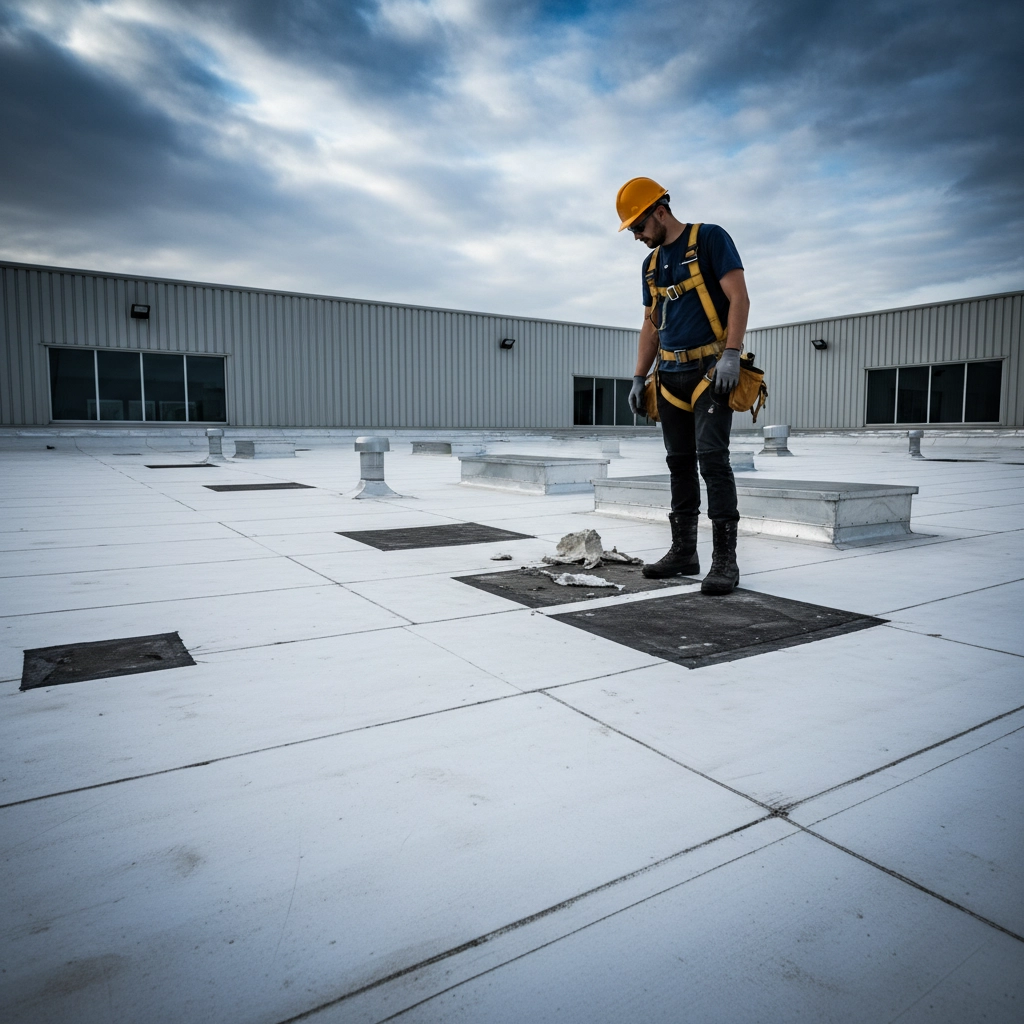
Your repair vs replacement decision should also consider the financial threshold. If total repair costs remain below 15–20% of replacement cost, repairs usually deliver better immediate ROI. This approach works particularly well when:
✔️ You have budget constraints requiring a short-term solution
✔️ The underlying roof structure and insulation remain in good condition
✔️ You're planning to sell or relocate within 5 years
✔️ Damage resulted from a specific weather event rather than gradual deterioration
🏗️ When Commercial Roof Replacement Becomes the Superior Investment
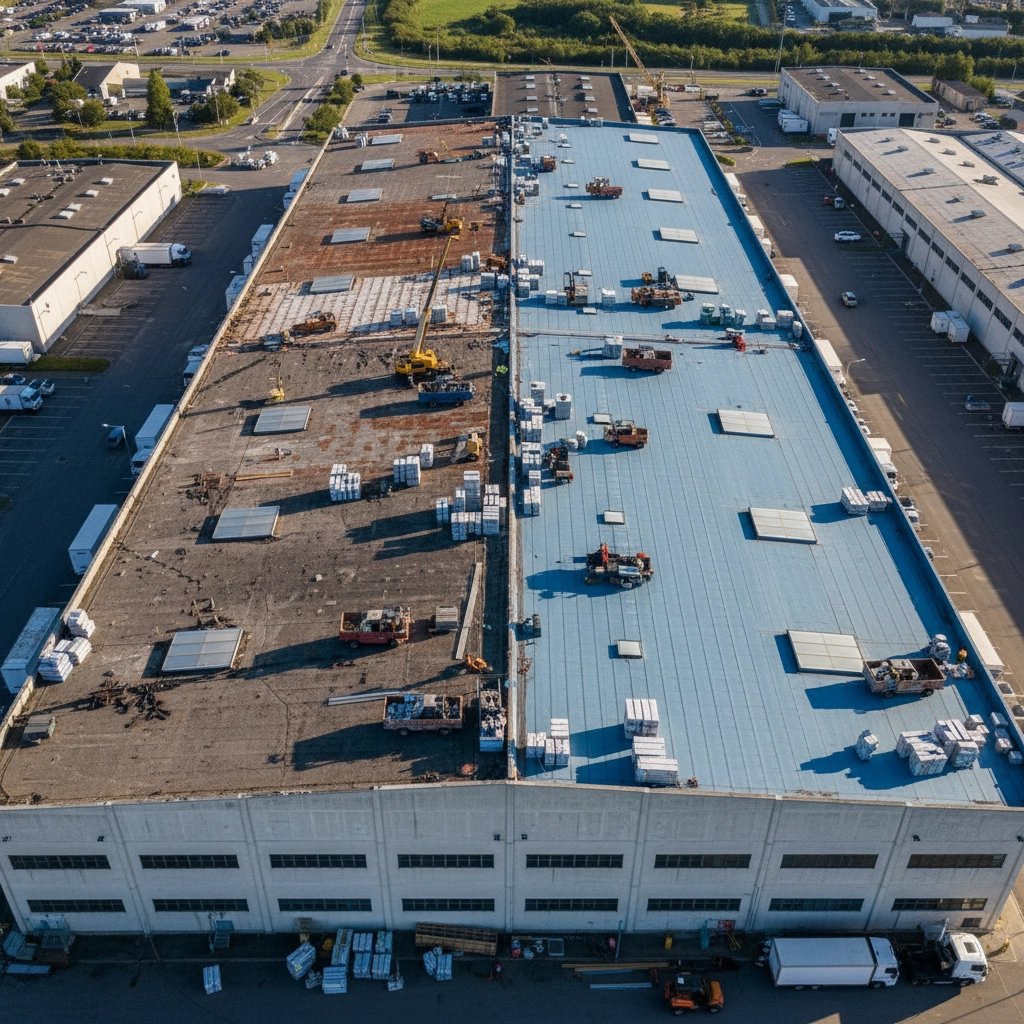
Commercial roof replacement shifts from expense to investment when your roof approaches or exceeds its expected lifespan of 15–25 years, depending on material type. The mathematics become compelling: while repairs might cost less upfront, replacement often provides superior long-term financial performance.
Here's when replacement makes sense: if you're making frequent repairs more than twice annually, you're likely throwing money at a deteriorating asset. A critical warning sign emerges when annual maintenance costs exceed £20 per m²: this indicates your roof has entered exponential decay.
The replacement advantage becomes even clearer with older roofs. Years 1–5 involve minimal maintenance costs, but by year 15 and beyond, you're facing significant ongoing repairs and emergency call-outs. Consider this UK-sized example:
A 1,850 m² roof (around 20,000 sq ft) costs roughly £225,000–£315,000 to replace (assuming £120–£170 per m²), but total costs over 30 years without planned maintenance can reach £495,000–£630,000. With routine maintenance, that same 30-year total typically drops to £300,000–£420,000: potentially saving well over £150,000.
Energy Efficiency: The Hidden ROI Factor 💡
Modern commercial roofing replacement offers additional financial benefits through energy efficiency. High-performance single-ply systems, metal overcladding and improved insulation can reduce energy costs by 10–15% annually, while enhanced airtightness and detailing cut heat loss.
For example, a 1,850 m² building spending £24,000 per year on heating, cooling and ventilation could save around £3,600 per year with an energy-efficient roof replacement: yielding £54,000 in savings over 15 years. These energy savings often make replacement the clear winner when calculated over the roof's full lifespan and current UK energy prices.
💰 2025 Cost Breakdown: Repair vs Replacement (UK)
Understanding the true costs helps clarify your decision. Here's what commercial roofing costs typically look like in the UK for 2025:
| Factor | Repair | Replacement |
|---|---|---|
| Minor Issues | £250–£650 | £6,000–£20,000+ |
| Timeline | 1–5 days | 3–7 days typical |
| Cost per m² | Variable patch costs | £90–£200 total |
| Lifespan Added | 2–5 additional years | 15–45 years |
| Warranty | Limited/none | Full materials & labour |
| Energy Savings | No improvement | 10–15% potential reduction |
Material-Specific Replacement Costs (guide ranges)
If replacement is your choice, different commercial roofing materials offer varying cost–benefit profiles in the UK:
- TPO (Single-Ply): £75–£120 per m², lasting 15–25 years. Energy efficient; seams need periodic inspections.
- EPDM (Rubber): £65–£110 per m², lasting 20–30 years. Cost-effective and flexible.
- PVC: £85–£130 per m², lasting 20–30 years. Strong chemical resistance; requires approved installers.
- Modified Bitumen (Bituminous Felt): £60–£100 per m², lasting 20–25 years. Good for roofs with regular foot traffic.
- Metal Roofing/Overcladding: £100–£160 per m², lasting 30–45 years. Higher upfront cost but excellent longevity and low maintenance.

🇬🇧 UK Regulations & Typical Building Context
When planning repair or replacement in the UK, factor in the following:
- ✔️ Building Regulations (Part L & Part B): Ensure compliant U-values and fire performance. Approved Document L (energy) and B (fire safety) drive insulation thickness and choice of fire-rated systems.
- ✔️ Control of Asbestos Regulations 2012: Many older warehouses and factories have asbestos cement roofing. You must survey (R&D where applicable), follow correct removal/overcladding methods, and use trained operatives.
- ✔️ CDM Regulations 2015: Commercial roofing works fall under CDM. Define roles (Client, Principal Designer, Principal Contractor), provide a construction phase plan, and notify HSE (F10) where required.
- ✔️ Working at Height Regulations 2005: Edge protection, safe access, rooflight protection, and fall-arrest systems are mandatory considerations.
- ✔️ Product Compliance & Warranties: Use UKCA/CE-marked materials from approved manufacturers. System warranties of 15–25 years are common when installed by accredited contractors.
Typical UK assets we work on include distribution warehouses, logistics hubs, production plants, retail parks, NHS estates, schools and universities, and office campuses. UK weather brings wind-driven rain, prolonged wet periods and coastal corrosion—all of which influence detailing, fixings, and material selection.
🎯 Strategic Decision Framework for Your Business
Your commercial roof repair vs replacement decision should align with your specific business circumstances:
Choose Repair When:
- Your roof is under 10 years old
- Damage affects less than 25% of surface area
- Repair costs stay below 15% of replacement costs
- You need temporary relief and plan short-term property holding
- The building structure and insulation remain sound
Choose Replacement When:
- Your roof is 15+ years old with frequent issues
- You're making multiple repairs annually
- Energy costs are climbing due to poor roof performance
- You plan to hold the property for 10+ years
- Insurance concerns arise due to roof age
The Risk Management Factor ⚡
For UK businesses exposed to Atlantic storms and prolonged rainfall, staying ahead of damage through proactive replacement prevents emergency situations that cost exponentially more than the roof itself. Water damage to stock, equipment, and interiors can quickly exceed roofing costs.
Emergency commercial roof repairs during severe weather often cost 2–3 times normal rates, and temporary solutions may fail when you need them most. A planned replacement allows you to choose timing, contractors, and materials rather than accepting whatever's available during crisis situations.
Making the Right Choice for Your Business
The commercial roofing decision ultimately comes down to total cost of ownership rather than upfront expenses. While repairs might seem attractive for immediate budget relief, replacement often provides superior long-term value when you factor in energy savings, reduced maintenance, improved reliability, and enhanced property value.
Consider your business timeline: if you're planning to hold the property for more than 10 years, replacement usually wins the financial analysis. For shorter holding periods or when cash flow is tight, strategic repairs can buy time while you plan for eventual replacement.
The key is conducting an honest assessment of your roof's condition and your business needs. A professional commercial roofing inspection can provide the data needed to make an informed decision based on your specific situation rather than guessing about the best path forward.
Remember that routine maintenance on newer roofs prevents costly deterioration, but once a commercial roof reaches mid-life and requires frequent attention, replacement almost always provides superior long-term financial performance for your business.
If you’d like a UK-focused opinion, book a roof survey with Total Cladding and Roofing Ltd. We’re CHAS, SafeContractor and NFRC accredited, work nationwide, and provide a 5-year workmanship guarantee with minimal disruption to your operations. Visit www.totalcladdingandroofing.co.uk to get started.
To upload drawings, specs and plans please go to the form on our contact page.
Get in Touch