
Commercial Roof Repair vs Replacement: Which Is Better For Your Business in 2025? (Cost Analysis Included)
The commercial roofing industry is experiencing significant changes in 2025, from new building regulations to advanced smart roofing technologies. If your business is facing roofing issues, you're probably wondering whether to patch things up with repairs or invest in a complete replacement.
The short answer? It depends on your roof's age, damage extent, and long-term business strategy. However, the decision isn't as straightforward as it might seem, and making the wrong choice could cost your business tens of thousands of pounds over the next decade.
🔍 Understanding Your Commercial Roofing Options
Before diving into costs, let's establish what we're comparing. Commercial roof repairs typically address specific problems like leaks, membrane damage, or flashing issues. Roof replacement involves installing an entirely new roofing system, often including insulation upgrades and modern materials.
In 2025, both options come with new considerations. Enhanced fire safety regulations following recent building safety updates mean any major work must comply with stricter standards. Meanwhile, sustainability requirements are pushing more businesses toward energy-efficient solutions.
The Current State of Commercial Roofing in 2025
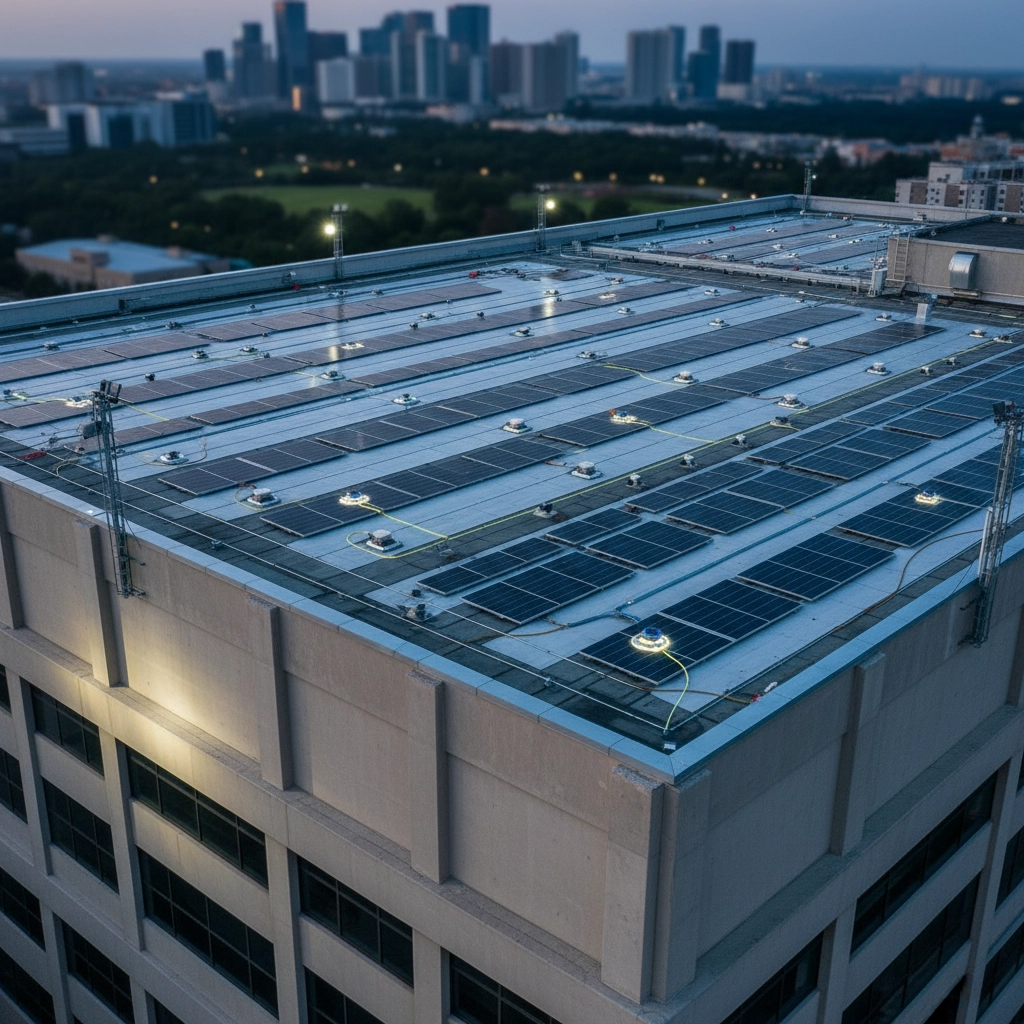
The commercial roofing landscape has evolved dramatically. Smart roofing systems with integrated sensors can now predict maintenance needs before problems occur. Cool roofing technology can reduce energy costs by up to 15%, while enhanced warranties of 20-30 years provide better long-term protection than ever before.
🛡️ UK Safety Compliance: Scaffold & Safety Netting Are Mandatory
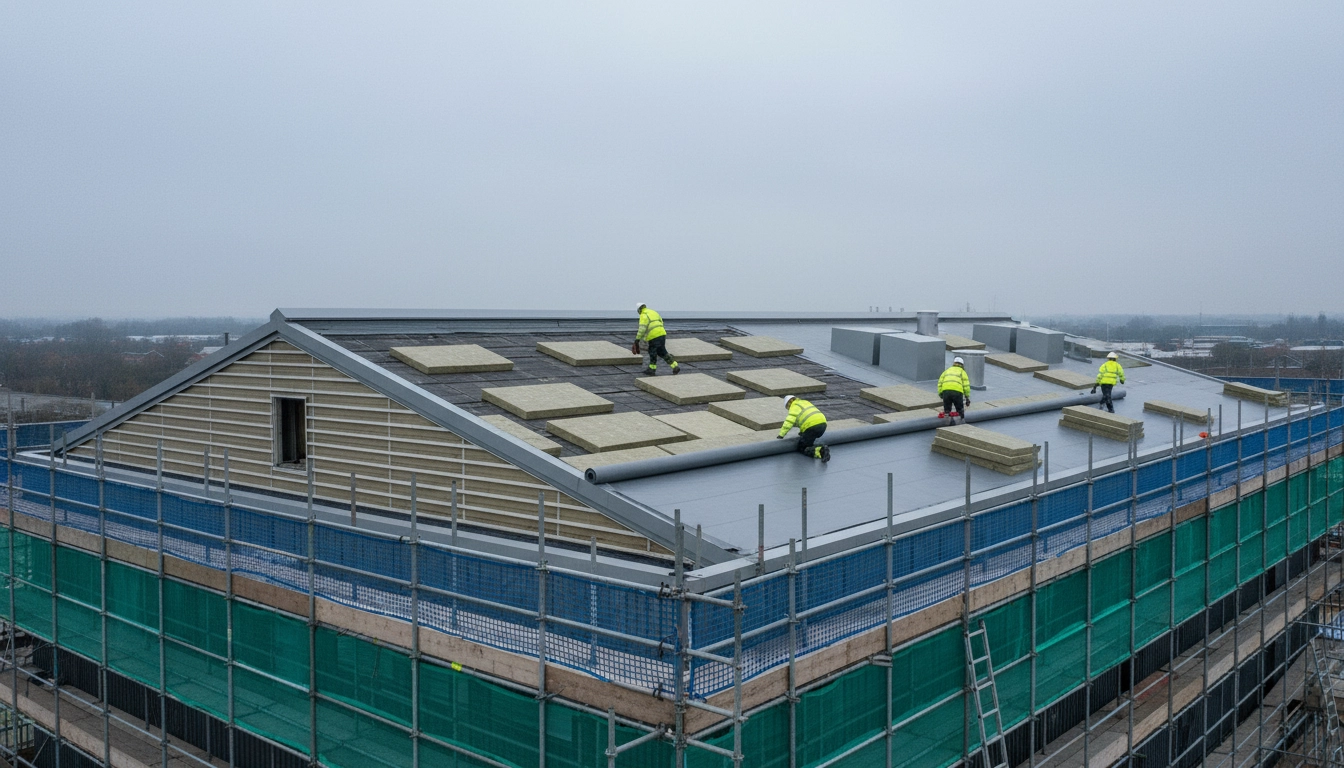
In the UK, all commercial roofing repairs must include scaffold access and safety netting to comply with working-at-height regulations and industry guidance. This isn’t optional — it protects your team and the public, and it’s a major cost driver even for simple patch repairs.
- ✔️ Expect an access package that includes scaffold/edge protection, safety netting beneath work areas, and controlled access/permits.
- ✔️ For small repairs, the access and safety setup can cost more than the repair itself — plan accordingly in your budget.
- ✔️ Ask for an itemised breakdown separating access/safety from materials and labour so you can compare quotes fairly.
- ✔️ To reduce spend, consider grouping multiple minor repairs into one visit so the scaffold and netting cost is amortised.
UK-specific tip: Beware of “ladders-only” quotes. If your contractor isn’t allowing for scaffold and safety netting, the quote is unlikely to be compliant and may expose you to risk.
🔧 When Commercial Roof Repair Makes Sense
Repairs aren't just about fixing immediate problems – they're about strategic maintenance that extends your roof's lifespan while preserving cash flow.
✔️ Ideal Repair Scenarios
Your roof is under 12 years old and experiencing isolated issues. Individual repair costs typically range from £500-£3,500 depending on the complexity. Common repairs include:
- Flashing repairs: £350-£1,400
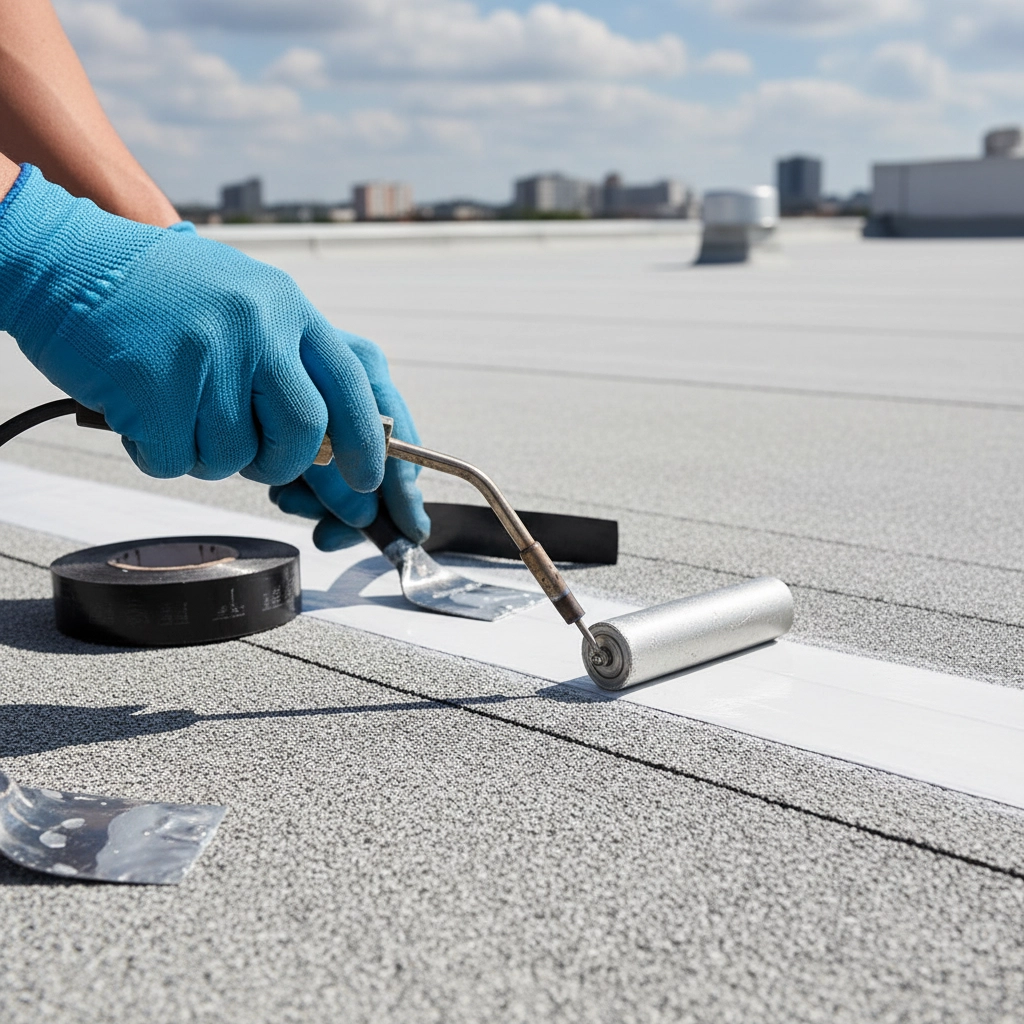
- Membrane seam fixes: £500-£3,500
- Drainage system rebuilds: £1,400-£2,000
- Puncture repairs: £300-£800
Damage affects less than 25% of your roof surface and the underlying structure remains sound. This is crucial – widespread damage often indicates systemic issues that repairs won't resolve long-term.
Advantages of Choosing Repairs
Lower immediate capital expenditure means you can address urgent issues without depleting operating budgets. This approach works particularly well for businesses with tight cash flow or uncertain long-term property plans.
Minimal business disruption is another key benefit. Most repairs can be completed during off-hours or in sections, allowing normal operations to continue. For retail businesses or manufacturing facilities, this operational continuity is invaluable.
Flexibility in timing allows you to schedule major capital expenditure when it suits your business cycle, rather than responding to emergency situations.
In the UK, remember to factor in the cost of scaffold and safety netting for any roof access — these are mandatory and can represent a significant portion of the total repair cost.
Disadvantages of Repair-Only Strategy
Recurring costs accumulate rapidly. A roof requiring frequent attention can consume approximately £22-£32 per square metre annually in maintenance costs. For a roof of around 1,860 square metres, that's £40,000-£60,000 yearly.
Energy inefficiency persists with older roofing systems. Poor insulation and outdated materials can add 10-20% to your annual heating and cooling costs.
Risk escalation is perhaps the biggest concern. What starts as a small leak can lead to structural damage, inventory loss, and business interruption costing far more than the original repair.
UK safety compliance costs are unavoidable. Repairs will typically require scaffold access and safety netting on live commercial sites, so build these into your maintenance budget from the outset.
🏢 When Commercial Roof Replacement is the Smart Choice
Replacement represents a strategic investment rather than an expense when evaluated over time. The mathematics often favour replacement for older or extensively damaged roofs.
✔️ Replacement Indicators for 2025
Your roof is over 15 years old or approaching the end of its expected lifespan. Modern commercial roofing systems last 25-30 years with proper maintenance, compared to 15-20 years for older systems.
Annual maintenance costs exceed approximately £22 per square metre. At this threshold, replacement typically provides better ROI within 7-10 years.
Energy inefficiency is impacting operations. If your HVAC costs are higher than comparable buildings, roofing upgrades can deliver immediate and ongoing savings.
Damage affects more than 30% of the roof surface or involves structural elements like decking or support systems.
Investment Returns from Replacement
The ROI on commercial roof replacement in 2025 is compelling when all factors are considered:
Energy savings: Modern roofing systems reduce HVAC costs by 10-15% annually. For a typical commercial building, this represents £3,000-£5,000 yearly savings.
Maintenance elimination: New roofs require minimal maintenance for the first 10-15 years, eliminating emergency repair costs averaging £8,000-£12,000 annually for older systems.
Insurance benefits: Many insurers offer premium reductions for buildings with modern roofing systems, particularly those with enhanced fire resistance or storm damage protection.
Property value increase: A new roof can add 5-10% to your building's value, often exceeding the replacement cost over time.
Replacement Considerations
Substantial upfront investment requires careful planning. Expect costs of approximately £110-£150 per square metre for quality commercial roofing systems in 2025. These figures usually include access provisions such as scaffold and safety netting in line with UK standards, which are a major cost driver.
Business disruption during installation can impact operations for 2-4 weeks, depending on building size and complexity. However, experienced contractors can often work in phases to minimize disruption.
💰 2025 Cost Analysis: Repair vs Replacement
Let's examine real-world costs for a 1,860 square metre commercial building:
Repair Strategy Costs (10-Year Timeline)
- Initial repairs: £15,000-£25,000
- Annual maintenance: £40,000-£60,000 (escalating yearly)
- Emergency repairs: £50,000-£75,000
- Energy inefficiency costs: £30,000-£50,000
- Total 10-year cost: £135,000-£210,000
Replacement Strategy Costs (10-Year Timeline)
- Initial replacement: £200,000-£280,000
- Minimal maintenance: £10,000-£15,000
- Energy savings: £30,000-£50,000 (savings)
- Insurance benefits: £5,000-£8,000 (savings)
- Net 10-year cost: £155,000-£237,000
The result? While replacement requires higher upfront investment, the total cost of ownership often favours replacement within 8-12 years, particularly when energy savings and avoided emergency repairs are factored in.
🎯 Making the Right Decision for Your Business in 2025
Immediate Action Items
Conduct a professional roof assessment to establish current condition and remaining lifespan. Look for certified contractors who understand 2025 building regulations and can provide detailed condition reports.
Analyse your maintenance spending over the past three years. If costs are trending upward sharply, replacement likely offers better value than continued repairs.
Consider your building's role in long-term business strategy. If you're planning to hold the property for 10+ years, replacement investment pays dividends. For shorter-term holdings, strategic repairs might be more appropriate.
Evaluate financing options. Many contractors offer flexible payment terms or financing packages that can make replacement more manageable from a cash flow perspective.
Request itemised access and safety measures. Ensure quotes clearly include scaffold design/edge protection and safety netting, so your budget reflects true UK compliance costs.
Red Flags That Indicate Replacement
- Multiple leaks appearing after storm events
- Recurring problems in the same areas despite repairs
- Visible sagging or structural concerns
- Energy costs significantly above industry benchmarks
- Insurance claims becoming more frequent
When Repair Makes Sense
- Isolated damage from a specific event (storm, equipment installation)
- Roof age under 12 years with good maintenance history
- Limited budget for capital improvements
- Uncertain property tenure (lease expiring within 5 years)
🏆 Professional Recommendations
The decision between repair and replacement shouldn't be based solely on initial cost. Consider the total cost of ownership, including energy efficiency, maintenance requirements, and business disruption.
For most businesses with roofs over 15 years old, replacement provides superior long-term value. The combination of energy savings, warranty protection, and eliminated emergency repairs typically justifies the investment within a decade.
However, strategic repairs remain the right choice for newer roofs with isolated problems. The key is working with experienced contractors who can provide honest assessments and long-term maintenance planning.
Total Cladding and Roofing Ltd specialises in helping businesses make these critical decisions. Our comprehensive assessments consider not just current condition, but future maintenance requirements, energy efficiency opportunities, and compliance with 2025 building standards.
Whether your business needs targeted repairs or complete replacement, the right choice depends on your specific circumstances. Don't let short-term thinking lead to long-term costs that could have been avoided with proper analysis and strategic planning.
For a professional assessment of your commercial roofing needs and detailed cost analysis specific to your building, contact our team for a comprehensive consultation that will help you make the most cost-effective decision for your business in 2025.
To upload drawings, specs and plans please go to the form on our contact page.
Get in Touch